Bridging the Gap to Access Astronomy in Schools in All Areas of Colombia

Sofia Rojas-Ruiz 1 , Nataly  Ospina 2 , Juan Pablo Uchima Tamayo 3 , Natalia Lucía Oliveros-Gomez 4 , Laura Ramírez Galeano 5

  • 1 Max Planck Institute for Astronomy, Heidelberg
  • 2 University Autonoma of Madrid, Madrid
  • 3 University of La Serena, La Serena
  • 4 University of Guanajuato, Guanajuato
  • 5 University of Geneva, Geneva

Abstract

The Network of Colombian Astronomy Students (RECA in Spanish) aims to create and maintain strong links among students in the country, with the ultimate goal of fostering the development of Colombian astronomy education and research. Astronomy is not a subject specifically contemplated in the Colombian school curricula. However, there is a growing interest in exploring this science in schools in the country. Thus, the RECA Education Group was formed two years ago to bring Astronomy to the classroom. We develop projects independently and in collaboration with the Office of Astronomy for Education (OAE)-Colombia. The projects we promote in the Education Group are: i) Provide the opportunity in Colombian schools to interact with professional astronomers from RECA through personalized virtual interactions, since the majority of Colombian astronomers live abroad. Additionally, we offer talks showcasing the possible career paths to becoming an astronomer, developments of this science in Colombia, as well as the important role of women in science, and diversity in the field. These virtual meetings have been challenging to finalize because we intend to reach schools in underprivileged regions of the country that often have restricted internet access. Therefore, we have implemented creative solutions such as using WhatsApp to communicate with the teacher and as a medium to present the talks to the students. We have also pre-recorded the talks so the teacher takes the material to the school and brings us back feedback from the students with questions and drawings.ii) We also advise interested teachers and school administrators on the curriculum for a class, suggesting materials such as telescopes and binoculars, or helping create astronomy clubs. iii) In a recent partnership with "Shadow the Scientists" at the University of California, Santa Cruz, we bring the opportunity for students in Colombian schools to perform live remote observations with renowned large telescopes, such as at the W.M. Keck Observatory. This way, students learn first-hand how an astronomer does science in one day of work.In this EAS conference session, we will present how the opportunities that the RECA Education Group has brought to the community of Colombian students have generated a great impact in a short time. Children and young students are now more motivated to study scientific areas, and teachers are driving more projects to implement astronomy in their classes. We continue to work hard to overcome infrastructural and societal barriers that inhibit the teaching of astronomy in Colombian schools. We will also discuss future projects and ideas to support the growth of this RECA initiative for Education.

About the RECA Education Program

Colombia is an emerging country in astronomy. Just in the past 10 years, undergraduate and graduate programs in astronomy began to be established in the country. The Network of Colombian Astronomy Students (RECA in Spanish) aims to strengthen links between professional Colombian astronomers and students at different educational levels.
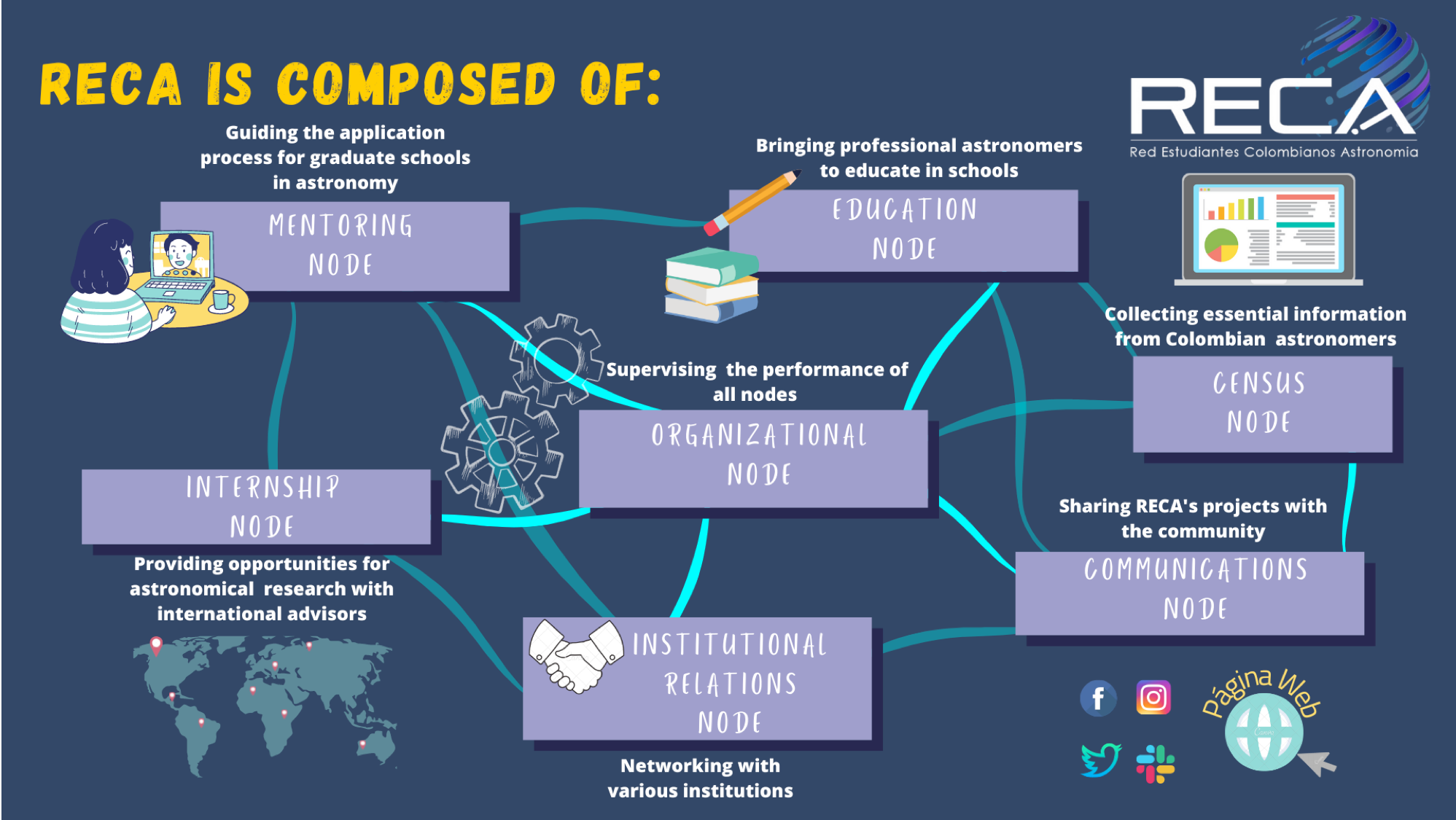
Figure 1. Presents the organization and different nodes or programs that compose the Netwrok of Colombian Astronomy Students (RECA). Here we emphasis the work developed by the RECA Education Program bringing professional astronomy to school all around the country.

The RECA Education Program focuses on teaching astronomy to school students from 4 to 18 years old, with the support of over 30 professional Colombian astronomers. All resources we offer are free of charge for the benefit of students and teachers.

We highlight two of our most important projects and the positive impact generated in urban and rural schools of the country.

Learn more about RECA Education here: ww.astroreca.org
You can write to us at reca.educacion@gmail.com
Follow RECA on Facebook, Twitter, IG: @RECAstronomia
 

1. Astronomy Goes to your School

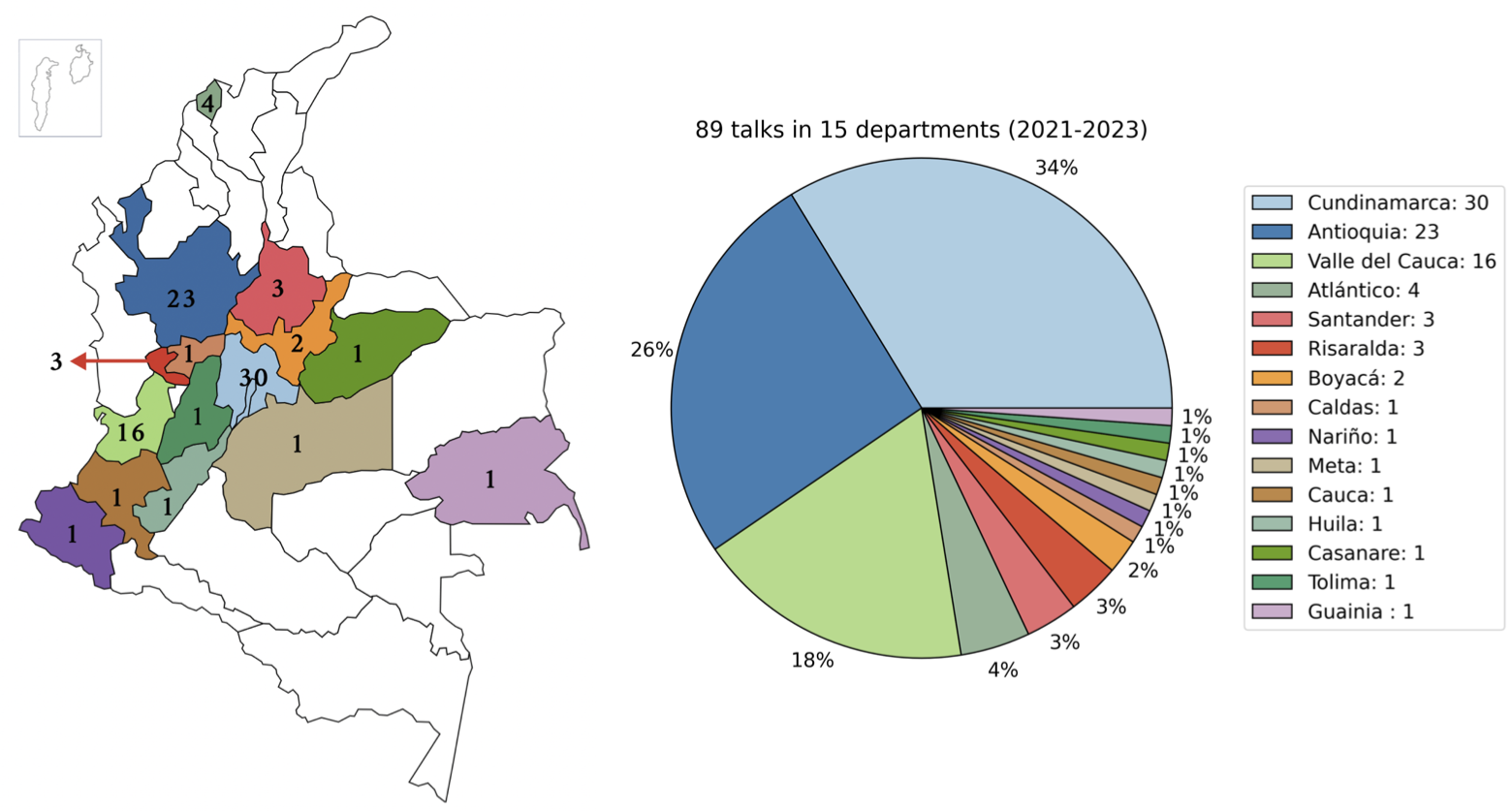
This project has been carried out every semester for three years. The objective is for students to meet Colombian astronomers and ask questions on various topics of astrophysics, perform interviews, learn about women in astronomy, and career paths studying astronomy in the country and abroad. Given that over 50% of Colombian astronomers work overseas, we perform these talks virtually. 


Figure 2. Left: Map of Colombia showing the departments where our RECA Education Program of "Astronomy Goes to your School" has taken place since 2021. We have been able to reach 15 out of the 32 departments of Colombia. Right: The majority of the participating schools are from departments with capital cities that offer the highest quality of education and scientific development: Cundinamarca (34%), Antioquia (26%), and Valle del Cauca (18%). However, we have been able to reach at least one school in departments that were significantly affected by the history of violence and war in Colombia, and which still have poor educational infraestructure such as Casanare, Cauca, Guainia and Meta.

Typically, the rural areas and their communities in Colombia have been negatively impacted by poor education and infrastructure. Despite the experience of inapproriate internet connection or virtual environments, our program has been able to reach these areas and make a positive impact in the young community.

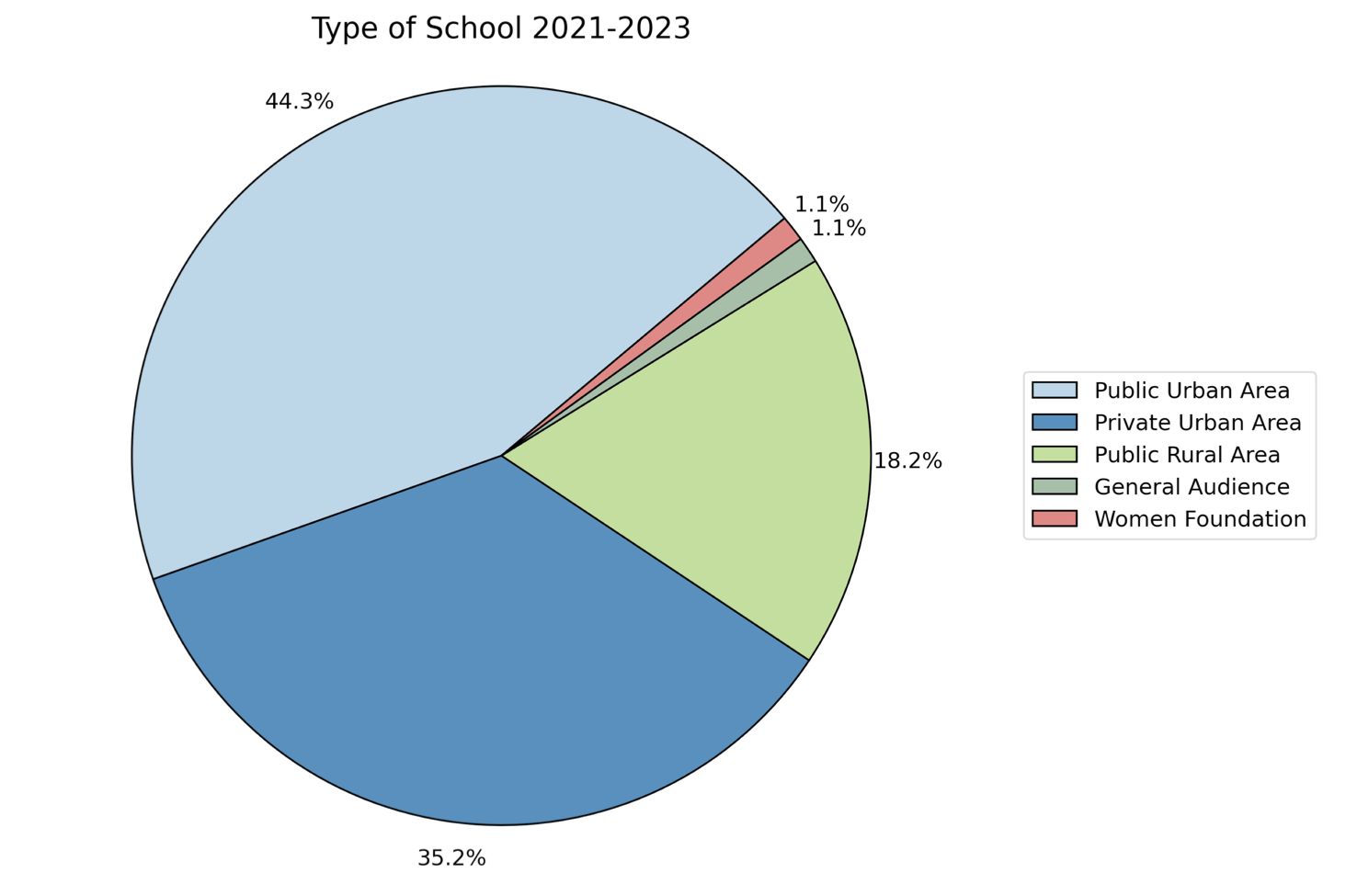
Figure 3. During the full 3-year duration of our project, about 80% of participating schools are from cities and the remaining 20% are from rural areas on the country. Among the urban schools, more than half are from public institutions, just as all the participating schools from rural areas. Public schools are generally uderstaffed from teachers and teach students from low-income families. Regardless, these communities show the greatest interest in learning about astronomy and related STEM fields. This RECA Education project is generating the greatest impact in the more underrepresented population of the country while supporting the next generation of scientists.

Video 1. Examples of the schools where the project "Astronomy Goes to your School" has taken place.

2. Remote Observing with Professional Telescopes

This is a joint initiative starting in 2023 between the RECA Education Program and Shadow the Scientists (StS). We show children and young students from a remote setting how astronomy is done professionally by 'shadowing' astronomers from the University of California at Santa Cruz (UCSC) while they observe the universe with some of the most prestigious telescopes in the world. Some of these are the two 10-meter telescopes at the W.M. Keck Observatory in Hawai'i, the Lick Observatory in California, and the Subaru Telescope from the National Observatory of Japan.

Additionally, this project gives the opportunity to Colombian astronomers to support the instruction of observations and share this experience with schools all over the country.


We have performed two sessions in February and April. For each of these observations, four public schools participated with a total of ~80 students. A Colombian astronomer meets virtually with the schools to explain the observations that will take place, the science and the instruments that will be used. They also are the mediator for questions and interactions during the ~2 hours of observations. The sessions were accompanied by the organizers of StS and RECA Education, the observing astronomer at Keck headquarters, and the Colombian astronomer.

Figure 4. Live session of the observations of Ultra Compact Dwarfs (UCDs) with the Keck II​ Telescope at the W.M. Keck Observatory in Hawaii, USA.